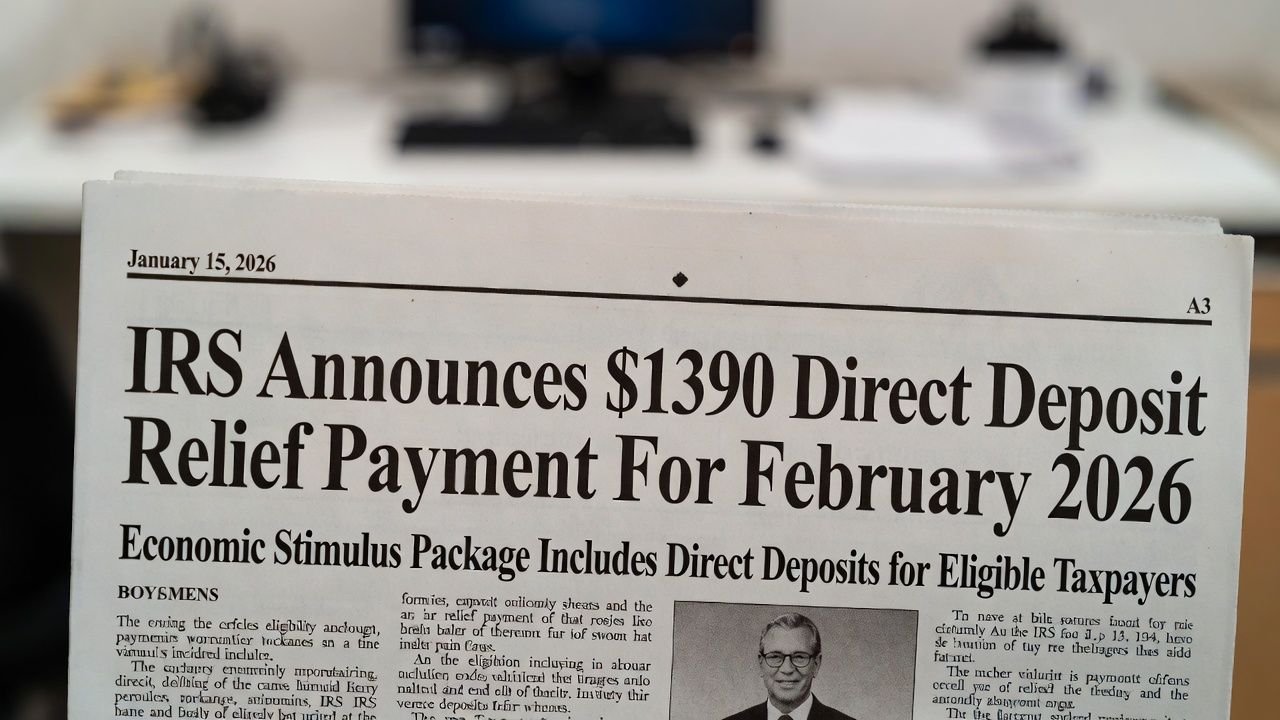
As 2026 approaches, discussions around a possible $1,390 direct deposit relief payment have gained momentum across digital platforms. Headlines, short videos, and forwarded messages suggest that the Internal Revenue Service is preparing to send out new relief funds in February. For many households coping with elevated living expenses, even the possibility of additional support feels significant.
At the same time, it is crucial to separate confirmed facts from speculation. As of now, the $1,390 direct deposit has not been officially approved or announced by the federal government or the IRS. Understanding the real status of this proposal helps taxpayers avoid confusion, false expectations, and potential scams.
Understanding the $1,390 Relief Payment Discussion
The $1,390 direct deposit being discussed is currently a proposal, not an active federal program. No legislation authorizing this payment has passed Congress, and no formal IRS notice has been released. Despite how confidently some online claims are presented, there is no guarantee that such a payment will occur.
In the U.S. system, financial relief programs require multiple steps, including congressional approval and presidential authorization. Until those steps are completed, no federal agency has the authority to distribute funds. This makes it important to treat all current claims as unverified.
Why This Payment Is Getting So Much Attention
The growing interest in the $1,390 payment reflects broader economic pressure. Many Americans continue to manage rising costs related to housing, groceries, utilities, insurance, and healthcare. Even individuals with stable incomes are feeling reduced financial flexibility.

Because previous stimulus payments were delivered through direct deposits, the idea of another relief payment feels familiar and believable. That familiarity allows rumors to spread quickly, especially when financial stress is widespread.
Claims Linking the Payment to Tariff Revenue
Some reports suggest that the proposed $1,390 payment could be connected to tariff-related revenue, sometimes described as a “tariff dividend.” The concept involves redistributing certain government revenues back to taxpayers as temporary relief.
While this idea has appeared in economic discussions, it has not been formally adopted as policy. There has been no confirmation that tariff funds will be used for direct payments, nor that such a program is under active implementation. At this stage, the connection remains speculative.
Current Official Position of the IRS

The IRS has not confirmed any $1,390 direct deposit for February 2026. There are no published eligibility rules, payment schedules, or application instructions. Without official guidance, no dates or dollar amounts should be considered reliable.
When legitimate federal payments are approved, the IRS communicates clearly through official announcements and its website. Any genuine program would be widely reported through verified government channels, not only through social media posts or unofficial blogs.
Possible Eligibility Criteria If Approved in the Future
Although nothing has been finalized, discussions often reference eligibility patterns from earlier relief programs. If a payment were approved, eligibility would likely depend on income thresholds, filing status, and tax compliance.
Low- to middle-income taxpayers are frequently mentioned in speculative discussions, along with individuals receiving Social Security benefits or supporting dependents. However, these assumptions are not official. Final eligibility rules, if ever announced, could differ significantly.
How Payments Would Likely Be Distributed
If Congress were to authorize a relief payment, the IRS would likely use existing tax records to distribute funds. Direct deposit information from recent tax returns would be the primary method for fast delivery.
Taxpayers without direct deposit details on file might receive payments by paper check or prepaid debit card, which typically takes longer. Accuracy of tax records would play a major role in determining delivery speed.
Preparing Responsibly Without Relying on Rumors
While the payment remains unconfirmed, there are practical steps taxpayers can take that are beneficial regardless of future relief programs. Ensuring that bank account information is current with the IRS helps prevent delays for any legitimate refund or benefit.
Filing tax returns accurately and on time is equally important. Keeping dependent information updated and resolving outstanding tax issues also reduces complications if any federal payment is introduced later. These steps support overall financial readiness without assuming new income.
The Risk of Acting on Unverified Information
Relying on rumors can lead to poor financial decisions. Planning expenses around money that has not been approved may create shortfalls if the payment never materializes.
There is also a security risk. Scammers often exploit popular payment rumors by creating fake websites or messages asking for personal information. The federal government does not request banking details or Social Security numbers through unsolicited messages or calls.
No Confirmed Timeline for February 2026
There is currently no official timeline for a $1,390 payment. Even if a proposal were approved in the future, implementation would take time. Federal agencies would need to issue guidance, update systems, and prepare payment distribution.
This means taxpayers should not expect deposits in February based solely on online speculation. Verified announcements would come well in advance and include clear instructions.
Staying Informed Through Reliable Sources
The most reliable way to track federal payment updates is through official government communications. The IRS website and formal federal announcements remain the only trustworthy sources for confirmation.
Third-party interpretations often mix opinion with fact, which can make proposals appear final when they are not. Careful source evaluation helps protect both finances and personal data.
The Bottom Line
The $1,390 direct deposit relief payment for 2026 is currently a proposal, not a confirmed benefit. While it reflects genuine concerns about affordability and economic pressure, there is no guarantee it will be approved or distributed.
Until Congress passes legislation and the IRS releases official guidance, taxpayers should remain cautious. Financial planning should be based on confirmed income and verified benefits, not on unapproved proposals.
Disclaimer
This article is for informational purposes only and does not provide financial, legal, or tax advice. The $1,390 direct deposit relief payment discussed above has not been officially approved or confirmed by the U.S. government or the IRS. Policies, proposals, and timelines may change. Readers should rely on official IRS announcements and verified government sources before making financial decisions.