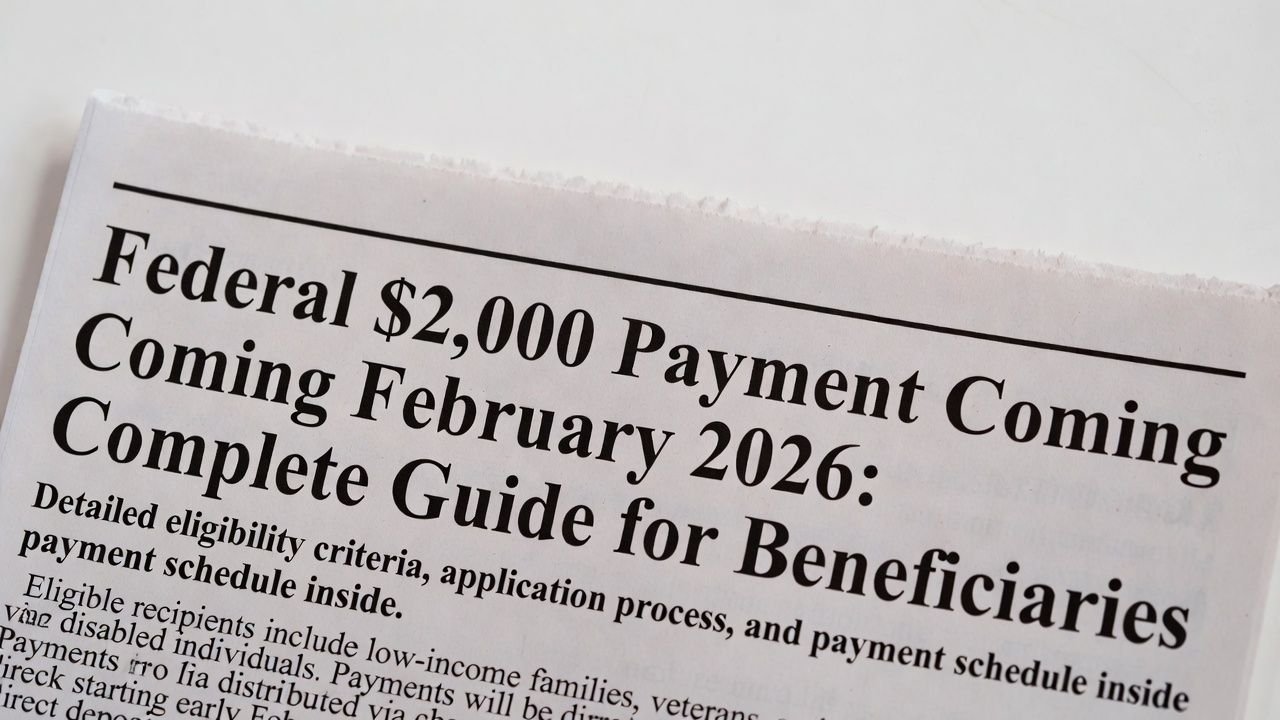
As 2026 approaches, conversations around a possible federal $2,000 payment are becoming increasingly visible across the United States. Rising living costs continue to stretch household budgets, particularly for individuals on fixed incomes or dependent on federal assistance. Expenses such as housing, food, healthcare, insurance, and utilities remain elevated, leaving little room for financial flexibility.
Against this backdrop, reports of a potential one-time federal payment have sparked hope, concern, and confusion in equal measure. While some sources suggest the payment is already confirmed, the reality is more complex. Understanding the origin of the proposal, its current status, and what beneficiaries should realistically expect is essential.
Background Behind the Federal $2,000 Payment Proposal
The idea of a federal $2,000 payment stems from ongoing policy discussions about cost-of-living relief. Although employment indicators have improved in some areas, everyday expenses have not declined accordingly. For many households, especially seniors and individuals with disabilities, income growth has failed to keep pace with inflation-related pressures.
Lawmakers have publicly acknowledged that certain groups face disproportionate financial strain. These discussions are not focused on stimulating consumer spending broadly, as was the case during earlier stimulus programs. Instead, they emphasize targeted support aimed at individuals most vulnerable to rising costs.
Is the February 2026 Payment Officially Confirmed?
Despite widespread online claims, there is currently no official confirmation of a $2,000 federal payment scheduled for February 2026. No legislation has been passed, and no formal announcement has been issued by the federal government, the IRS, or the Social Security Administration.

For any federal payment to be issued, Congress must approve a bill and the President must sign it into law. Only after that process is complete can agencies release eligibility criteria, payment schedules, and distribution methods. At this stage, February 2026 is a speculative timeframe, not a guaranteed payment date.
Who May Be Eligible If the Payment Is Approved
If the $2,000 payment is eventually authorized, it is widely expected to be targeted rather than universal. Current policy discussions suggest that eligibility would likely focus on individuals already connected to federal support systems.
Social Security and Disability Beneficiaries
Social Security retirees, Supplemental Security Income recipients, and individuals receiving Social Security Disability Insurance are frequently mentioned in discussions. These groups often have limited income options and are particularly sensitive to rising costs.
Veterans and Low-Income Households

Veterans receiving disability compensation or pensions may also be included if the proposal advances. In addition, low-income households that qualify for federal assistance programs could be prioritized, reflecting a shift toward needs-based support rather than broad eligibility.
Why a One-Time $2,000 Payment Can Still Make a Difference
While a single payment does not resolve long-term economic challenges, its short-term impact can be significant. For households living close to their financial limits, $2,000 can help manage overdue bills, cover rent increases, pay for medical care, or address urgent transportation needs.
Beyond practical expenses, temporary financial relief can reduce stress and provide a sense of stability. Preventing small financial setbacks from escalating into larger crises is often just as important as long-term solutions.
How This Proposal Differs From Previous Stimulus Programs
Earlier federal stimulus checks were designed to reach a broad segment of the population quickly during an economic emergency. Those programs prioritized speed and scale to stabilize the economy as a whole.
The proposed 2026 payment reflects a more targeted approach. Instead of universal distribution, the focus is on supporting individuals already receiving federal benefits or facing the highest cost-of-living pressure. This shift reflects budget constraints and lessons learned from the scale of previous relief efforts.
Public Response and the Spread of Misinformation
Public reaction to the $2,000 payment proposal has been mixed. Many people view it as a necessary acknowledgment of ongoing financial hardship, while others remain skeptical due to past experiences with delayed or abandoned proposals.
Social media has played a major role in amplifying speculation, often presenting unconfirmed discussions as settled policy. Financial experts consistently advise against relying on unverified information or adjusting budgets based on payments that have not been approved.
What Beneficiaries Can Do While Waiting
Even without confirmation, there are practical steps individuals can take that are beneficial regardless of future decisions. Ensuring that banking information is accurate and up to date with federal agencies helps avoid delays for any legitimate payment or refund.
Maintaining accurate personal records, including dependent information, and staying current with required filings also reduces complications. These actions do not guarantee a payment but ensure readiness if a program is eventually introduced.
What to Expect as 2026 Approaches
The coming months will be critical in determining whether the $2,000 payment proposal moves forward. If lawmakers reach an agreement, official guidance will follow, outlining eligibility rules, payment methods, and timelines. Historically, direct deposit has been the fastest and most reliable distribution method for federal payments.
If the proposal does not advance, the discussion still highlights an ongoing issue. Cost-of-living pressures remain a central concern for millions of Americans, and the demand for targeted financial relief is likely to continue influencing policy debates.
Final Outlook for Beneficiaries
At present, the federal $2,000 payment remains a proposal, not a confirmed benefit. No official eligibility criteria or payment dates have been announced. While the idea reflects real economic challenges, households should rely only on verified government information when making financial decisions.
Staying informed through official sources, keeping records accurate, and planning based on confirmed income remain the most reliable strategies during this period of uncertainty.
Disclaimer
This article is for informational and educational purposes only and does not provide financial, legal, or tax advice. Any federal payment program requires legislative approval and official government guidance. Eligibility rules, timelines, and payment details may change. Readers should rely on official government sources or consult qualified professionals for advice specific to their situation.