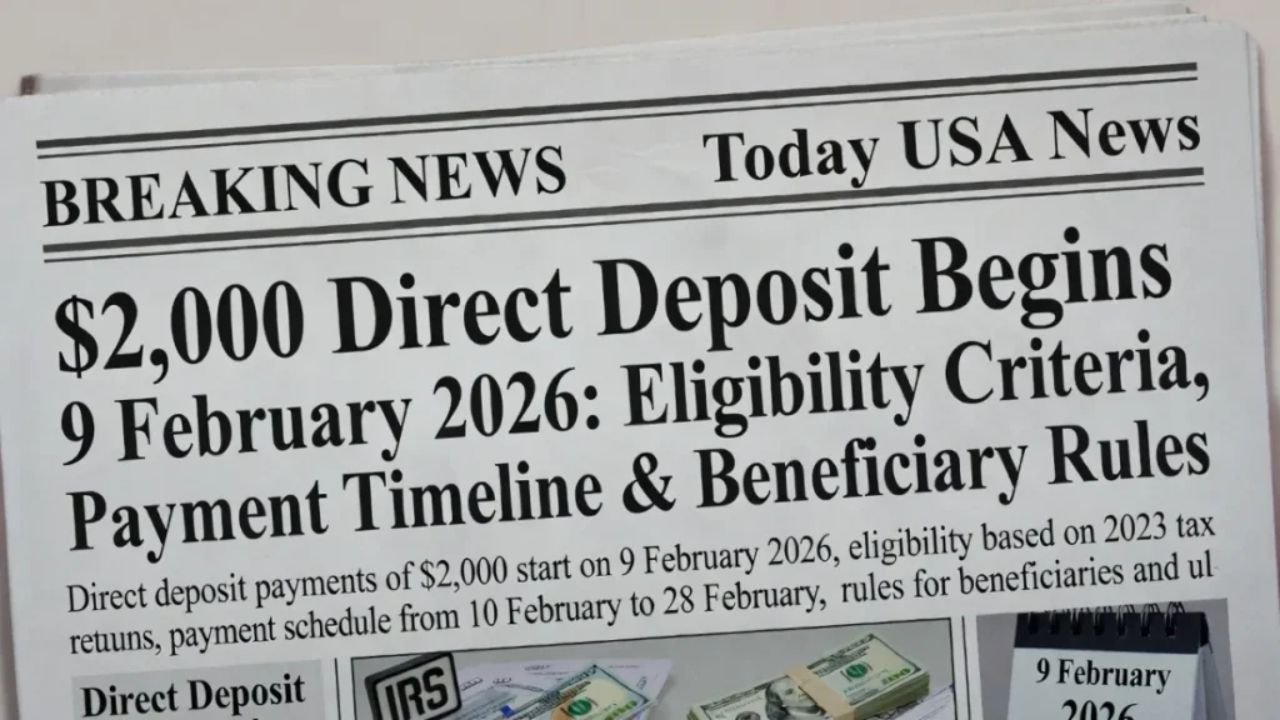
As February 2026 gets underway, headlines and social media posts are fueling widespread claims that a new $2,000 direct deposit program is launching on February 9. For households navigating higher living costs, rising insurance premiums, and ongoing financial pressure, the idea of a fresh federal payment feels both timely and reassuring. Screenshots of bank alerts and confident online commentary have only intensified expectations.
Despite the buzz, there has been no official announcement of a nationwide $2,000 relief payment tied to February 9, 2026. What many people are seeing instead is the result of routine payments overlapping early in the year, creating deposits that look larger or more sudden than usual.
Why the $2,000 Figure Sparks So Much Interest
The $2,000 amount holds powerful meaning for many Americans. In recent years, round-number payments were associated with emergency relief efforts, making them easy to remember and emotionally significant. When deposits close to that amount appear again, they quickly revive assumptions that a new federal initiative is underway.
Timing adds to the confusion. February is a peak month for early tax refunds, particularly for filers who submit returns as soon as the IRS opens the season. When refundable credits are included, refund totals can easily approach or exceed $2,000. Online posts often highlight the dollar amount without explaining its source, allowing speculation to spread faster than facts.
How Tax Refunds Create the Appearance of New Payments
For many recipients, tax refunds are the primary reason $2,000-sized deposits appear in February. Refund amounts vary widely based on income, filing status, dependents, and credits claimed. Taxpayers eligible for refundable credits, including those tied to children or lower income thresholds, may see refunds that are larger than expected.

Another contributing factor is payroll withholding. Workers who had more tax withheld from their paychecks than necessary throughout the year receive that excess back as a lump sum. While it may feel like a bonus, it is simply money already earned and paid, now being returned through the tax system.
Federal Benefits Arriving Around the Same Time
Tax refunds are only one part of the February payment picture. Social Security, Supplemental Security Income, Social Security Disability Insurance, and veterans’ benefits continue on their established schedules. Depending on work history, disability classification, or benefit type, monthly payments from these programs can approach $2,000 on their own.
When benefit payments and tax refunds arrive within days of each other, bank statements can show multiple deposits in a short window. Without context, these combined amounts can appear to be a single coordinated payment, even though they originate from entirely different programs.
Why Payment Dates Often Shift in February

Federal agencies regularly adjust payment dates when scheduled deposits fall near weekends or holidays. These adjustments are standard practice and help ensure beneficiaries receive funds on time. However, earlier-than-usual posting dates can surprise recipients who are not expecting them.
Banking policies also play a role. Some financial institutions release funds as soon as they receive notification of an incoming deposit, while others wait until the official posting date. These differences can make payments appear inconsistent across accounts, even though nothing unusual is happening at the federal level.
Eligibility Is Not Universal
One of the most common misconceptions circulating online is that everyone qualifies for a $2,000 direct deposit. In reality, there is no single eligibility standard because there is no single program. Each payment source has its own criteria.
Tax refunds depend on individual tax filings, income levels, and credits claimed. Social Security and disability benefits are based on work history, earnings records, or medical eligibility. Veterans’ compensation follows separate rules tied to service and disability ratings. As a result, one household may see a substantial deposit while another receives nothing at all.
Comparing payment amounts without understanding these differences often leads to frustration. Financial professionals consistently caution that viral claims rarely include the details needed to accurately assess eligibility.
The Risks of Misinformation and Scams
Periods of heightened expectation around government payments often attract scammers. Fraudsters exploit anticipation by sending messages that claim to help “release,” “verify,” or “expedite” deposits. These communications may request personal information, banking details, or upfront fees.
Misinformation also carries financial risks beyond fraud. Some families delay paying bills or take on short-term debt expecting a $2,000 deposit that never arrives. When the payment turns out to be a misunderstanding, the result can be increased stress rather than relief.
What February 2026 Really Represents
February 2026 does not mark the launch of a new stimulus or relief program. Instead, it reflects a period when existing systems overlap. Tax refunds, retirement benefits, disability payments, and veterans’ compensation all continue according to established rules. Together, they provide steady support to millions of Americans without the fanfare of a new announcement.
Any new federal payment program would require legislative approval and formal communication from government agencies. Until such announcements are made, deposits near $2,000 should be viewed as the outcome of current policies rather than surprise initiatives.
Staying Informed and Financially Prepared
The most reliable way to avoid confusion is to rely on official sources. Checking refund status through IRS tools, reviewing benefit payment schedules, and keeping personal records up to date all help ensure payments arrive smoothly. These steps also reduce the likelihood of falling victim to misinformation or scams.
While financial pressure remains a reality for many households, understanding how existing systems work provides clarity and control. Separating verified information from online speculation allows families to plan responsibly and make decisions with confidence.
Final Takeaway
The talk of $2,000 direct deposits beginning February 9, 2026 reflects misunderstanding rather than a new federal program. Larger deposits seen this month are almost always tied to tax refunds, benefit schedules, or routine timing adjustments. By staying informed and cautious, households can focus on managing their finances effectively without being misled by viral claims.
Disclaimer: This article is for informational purposes only and does not provide financial, legal, or tax advice. There is no newly announced nationwide $2,000 federal payment program tied to February 2026. Payment amounts and timing depend on individual tax situations and benefit eligibility. Readers should confirm details through official government sources before making financial decisions.